
Steyer's Political Prospects: A Financial Mismatch for Public Service
NewsHub
May 28, 2026
1 min read
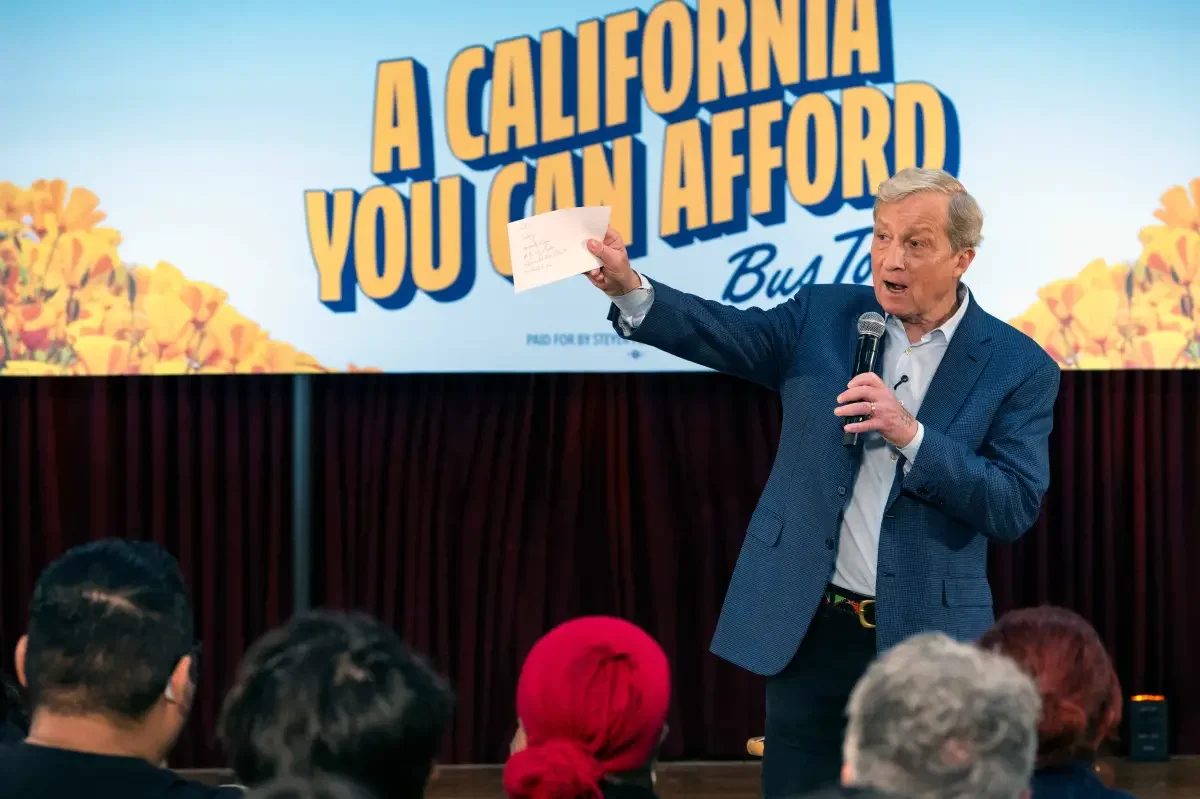
Despite significant personal financial investment in his political aspirations, Tom Steyer faces fundamental challenges regarding his suitability for elected office. Observers suggest that considerable campaign expenditures may not overcome inherent criticisms of his qualifications and perceived alignment with public service roles. The efficacy of his financial strategy in influencing public perception is being questioned as a result of these underlying concerns.
Key Facts
-
Candidate Tom Steyer
-
Core Issue Perceived unsuitability for public office
-
Key Tactic Substantial personal campaign spending
Impact
Tom Steyer's extensive financial contributions to his campaigns highlight a common theme in modern politics: the significant role of personal wealth in political maneuvering. This approach, while enabling a broader reach for campaign messaging, may be insufficient to address deeper-seated questions about a candidate's fundamental fitness for governing. Voters often look beyond financial investment to assess a candidate's policy alignment, leadership qualities, and perceived connection to the electorate's needs. The impact of this dynamic extends to the broader political landscape. It raises questions about the influence of money in politics and whether it can truly substitute for broader political capital, such as established public trust or a demonstrated track record of effective public service. For candidates like Steyer, the challenge lies in translating financial resources into genuine political credibility and broad-based voter appeal.
Key Insights
-
1
Financial Investment vs. Political Viability
A substantial financial war chest, while a powerful tool for campaign dissemination, does not inherently guarantee a candidate's suitability or acceptance for public office. Deeper qualitative factors often weigh more heavily in electoral decisions.
-
2
Public Perception of Wealth in Politics
The public remains divided on the role of personal wealth in politics, with some seeing it as a facilitator of independent campaigns and others viewing it with suspicion, questioning the candidate's ability to represent diverse interests.
Opportunities
For political strategists and candidates facing similar perception challenges, the opportunity lies in developing more nuanced approaches to campaign messaging. Instead of solely relying on financial firepower, campaigns could focus on grassroots engagement, issue-specific advocacy, and transparent communication to build trust and demonstrate genuine public service orientation. Technological advancements offer avenues for more targeted and authentic voter outreach. Utilizing data analytics to understand voter concerns on a granular level and employing digital platforms for direct, unscripted dialogue could be more impactful than broad, expensive advertising campaigns. This approach prioritizes substance and connection over sheer financial display.
Risks & Challenges
A significant risk for candidates like Steyer is that their considerable financial outlays may be perceived as an attempt to buy influence rather than earn it through genuine merit and voter connection. This can alienate segments of the electorate who are skeptical of wealthy individuals seeking political power and may view their motivations as self-serving. Furthermore, an over-reliance on spending can lead to a perception of detachment from the everyday concerns of ordinary citizens. If campaign messages are perceived as being crafted by well-funded advisors rather than reflecting authentic grassroots sentiment, it can undermine a candidate's credibility and make it harder to build the broad coalition necessary for electoral success. This can result in wasted financial resources and a missed opportunity to connect with voters on a deeper level.
Source url: https://nypost.com/2026/05/27/opinion/tom-steyers-wallet-is-boundless-but-sos-his-hypocrisy/
Related Articles