Unaccounted Valor: The Enduring Search for Missing Tuskegee Airmen of World War II
NewsHub
Apr 12, 2026
1 min read
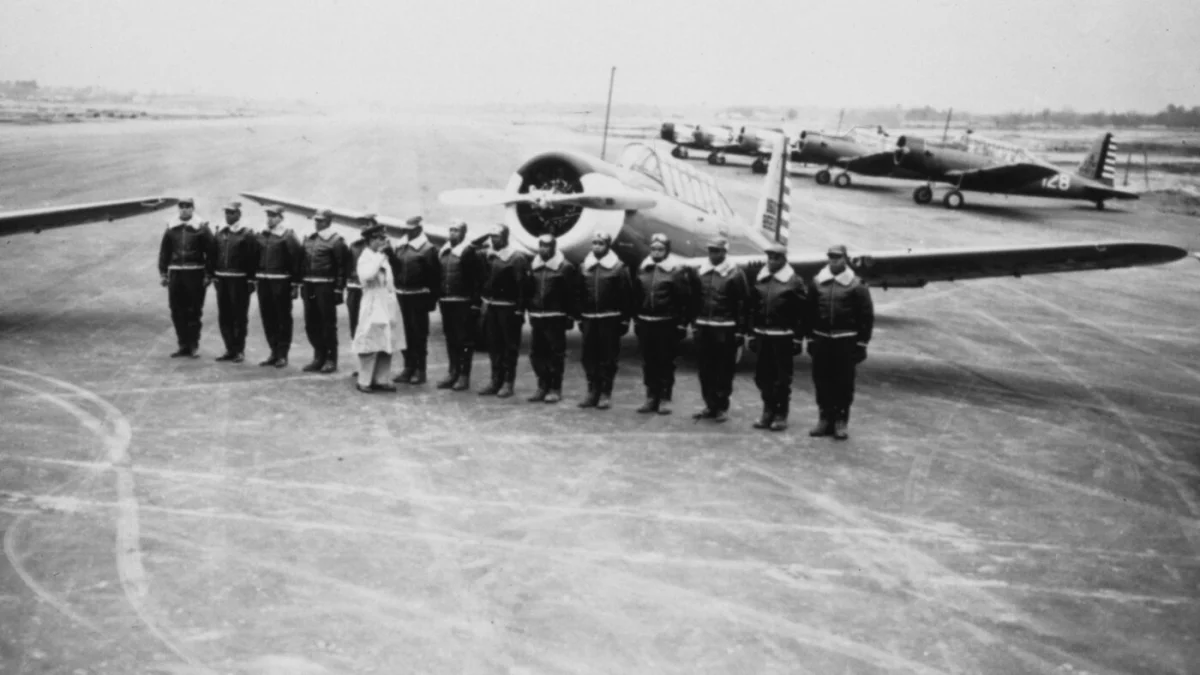
Decades after the conclusion of World War II, a significant number of Tuskegee Airmen, the pioneering African American military aviators, remain listed as missing in action. Their fates largely unknown, these individuals represent an unresolved chapter in military history and a lingering sorrow for their families. Recent investigative work, notably highlighted by NPR correspondent Cheryl W. Thompson's book "Forgotten Souls," brings these untold stories of sacrifice and the ongoing quest for closure to the forefront, emphasizing the importance of recognizing all contributions to the war effort.
Key Facts
-
Historical Event World War II
-
Group Involved Tuskegee Airmen (Black pilots)
-
Status of Individuals Dozens missing in action (MIA)
-
Current Situation Most missing individuals remain unfound
-
Recent Exposure Investigative work by NPR correspondent Cheryl W. Thompson, documented in her book 'Forgotten Souls'
Impact
The unresolved status of these missing Tuskegee Airmen carries profound impacts across several dimensions. For the families, the absence of definitive answers creates a perpetual state of grief and a lack of closure, affecting multiple generations. This enduring uncertainty complicates genealogical efforts and the ability to fully honor their ancestors' sacrifices with known final resting places or commemorative sites. From a broader historical perspective, the missing airmen represent an incomplete narrative of World War II, particularly concerning the contributions and experiences of African American service members. Their unrecovered status underscores the challenges faced by marginalized communities in having their stories fully acknowledged and integrated into the national consciousness, reinforcing the need for ongoing research and recognition efforts to ensure a more comprehensive and inclusive historical record.
Key Insights
-
1
Historical Justice
The ongoing efforts to identify and account for missing Tuskegee Airmen underscore the imperative for historical justice, ensuring that the sacrifices of all service members, especially those from historically marginalized groups, are fully recognized and documented.
-
2
Technological Potential
Advancements in forensic science, geophysical surveying, and archival data analysis offer new avenues for potentially locating and identifying remains that were previously inaccessible or undiscoverable.
-
3
Long-Term Societal Memory
The fact that these stories are still being actively pursued and published nearly eight decades later highlights the enduring nature of societal memory and the persistent human need for answers regarding past conflicts.
Opportunities
Technological innovation presents significant opportunities in the ongoing search for missing service members. Advanced aerial and underwater drone technology, coupled with sophisticated sonar and ground-penetrating radar, can systematically survey previously inaccessible or expansive areas where aircraft may have crashed. Furthermore, Artificial Intelligence and machine learning could be employed to analyze vast archives of historical combat reports, weather data, and local accounts, identifying patterns or overlooked clues that human researchers might miss, thereby narrowing search parameters. Beyond search and recovery, there are opportunities for educational and public engagement. Digital archives, interactive museum exhibits, and virtual reality experiences could be developed to tell the stories of these airmen, ensuring their legacy is preserved and understood by future generations. Collaborations between historical organizations, military agencies, and tech companies could create a synergistic approach to both discovery and remembrance.
Risks & Challenges
One significant risk in the ongoing effort to account for missing World War II personnel is the erosion of tangible evidence and institutional knowledge over time. As crash sites degrade due to environmental factors and as the generation with direct knowledge of the conflict passes, the window for locating and identifying remains becomes increasingly narrow. Furthermore, the sheer scale of the global conflict means that many potential sites are in remote, politically sensitive, or environmentally challenging locations, posing logistical and safety risks for recovery teams. Another risk pertains to the ethical and emotional complexities of such searches. The possibility of disturbing war graves or encountering human remains requires extreme sensitivity and adherence to international protocols. Public and family expectations must be carefully managed, as successful identification and repatriation are often years in the making, and many cases may ultimately remain unresolved despite best efforts. There's also the risk of misidentification, which could cause further distress to families.
Source url: https://www.npr.org/2026/04/12/nx-s1-5781023/tuskegee-airmen-disappeared-still-missing-cheryl-w-thompson
Related Articles